

Size guide
Dog Collar Size Chart: How to Measure Your Dog (+ Size by Breed)
Two minutes, a soft tape and a dog standing still. That is all you need to find the right collar size. Below you will find our size chart, a step-by-step way to measure, the two-finger rule and breed examples to start from.
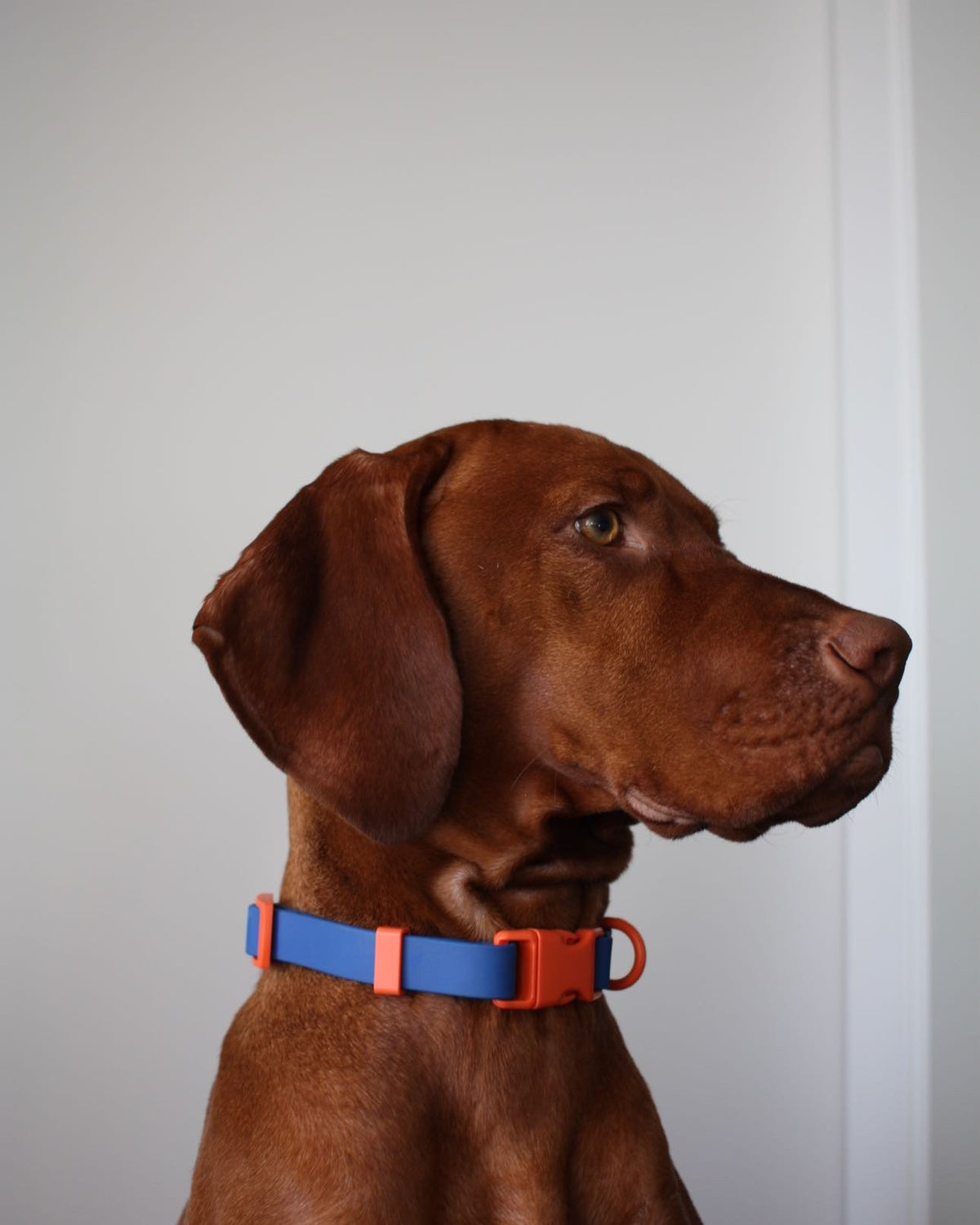
Quick answerMeasure around the neck where the collar sits, with your dog standing and a soft tape. Keep room for two fingers under the tape. Then pick the size whose range includes that number: Small 26–36 cm (10.2–14.2 in), Medium 36–47 cm (14.2–18.5 in), Large 41–59 cm (16.1–23.2 in). Our ranges already include that room, so don’t add extra on top.
The Fritz Collar size chart
The Fritz Collar comes in three sizes. Each one adjusts across a range of neck measurements, and the strap gets wider as the size goes up. It is made of PVC-coated nylon webbing with a steel D-ring and a clip buckle, so it rinses clean after a muddy walk and doesn’t hold on to smells.
| Size | Adjustable range | Width |
|---|---|---|
| Small | 26–36 cm10.2–14.2 in | 1.5 cm0.59 in |
| Medium | 36–47 cm14.2–18.5 in | 2 cm0.79 in |
| Large | 41–59 cm16.1–23.2 in | 2.5 cm0.98 in |
Breed examples at a glance
A starting point for adult dogs. Always measure first: dogs of the same breed can need different sizes.
- Small · 26–36 cm
- Jack Russell, Miniature Dachshund, Shih Tzu, Cavalier King Charles Spaniel, Miniature Schnauzer.
- Medium · 36–47 cm
- Beagle, French Bulldog, Cocker Spaniel, Border Collie, Corgi.
- Large · 41–59 cm
- Labrador Retriever, Golden Retriever, German Shepherd, Boxer, Dalmatian.
Choose by neck measurement, not breed alone. Necks below 26 cm or above 59 cm fall outside our current sizes. For a Standard Dachshund, measure before choosing Small.
Between two sizes?
Some ranges overlap. At 43 cm, for example, both Medium and Large cover the measurement; Medium has a 2 cm strap and Large a 2.5 cm strap. Choose your preferred width while staying within the stated range.
Check the fit when the collar arrives: it should not slip over your dog's head.
Chat isn’t opening right now. Contact Danielle.
How to read this chart
- The adjustable range is a neck measurement. It is not the total length of the strap, so you can compare it straight to your number.
- The room is already included. Measure with two fingers under the tape, then compare. Don’t add extra centimetres or inches.
- Aim for the middle of a range. That leaves room to adjust both ways, for example when a winter coat grows in.
- Below 26 cm (10.2 in) or above 59 cm (23.2 in) falls outside our current sizes.
How to measure your dog for a collar
Measure your dog, not the old collar. Sizes differ from brand to brand, and an old collar may have been set too loose or too tight for years.
- Grab a soft tape measure. A sewing tape is ideal. No tape? Use a piece of string or a shoelace, mark it, then measure it flat against a ruler.
- Find where the collar sits. That is the base of the neck, where it meets the shoulders, not right behind the ears. Many dogs have a narrower neck near the head.
- Measure with your dog standing. Sitting compresses the neck and lying down bunches the skin. Standing and calm gives the most accurate number. A treat helps.
- Snug, with two fingers underneath. The tape should touch the coat without squashing it. Slide two flat fingers between the tape and the neck, then read the number.
- Compare with the chart. Choose the size whose range includes your number, ideally near the middle. Measure twice. If the two numbers differ, use the average.
Tip: save the number in your phone. It comes in handy for a harness, a gift or the next collar.
Neck size vs collar length: why charts disagree
Some size charts tell you to add 2 inches to the measurement. Others say 1 cm, or 5 cm. They are not really contradicting each other. It depends on what the chart lists.
- Some charts list the bare neck size. Then you add room for comfort on top.
- Some list the collar length, from the buckle to the last hole. Then you compare in a different way.
- Our chart lists the neck measurement taken with two fingers of room. You measure once, with your fingers under the tape, and compare directly. Nothing to add.
If you add room anyway, you may end up a size too big. It is the most common mistake when people compare collars from different brands.
The two-finger rule: too tight or too loose?
With the collar on, you should be able to slide two flat fingers between the collar and the neck. It is the rule most vets and collar makers use. On a small dog, two slim fingers will do. On a big dog, lay them flat.
| Too tight | Too loose |
|---|---|
| You can’t fit two fingers underneath | Three or more fingers slide in easily |
| Your dog coughs or gags on the leash | The collar spins and the ring ends up under the chin |
| Red marks, rubbed fur or irritation | It slips over the ears |
| Your dog keeps scratching at the neck | Your dog can back out of it |
The quickest check: pull the collar gently forward. It should not come over the head. Check again after grooming, a change in weight or a seasonal moult.
Is your dog between sizes?
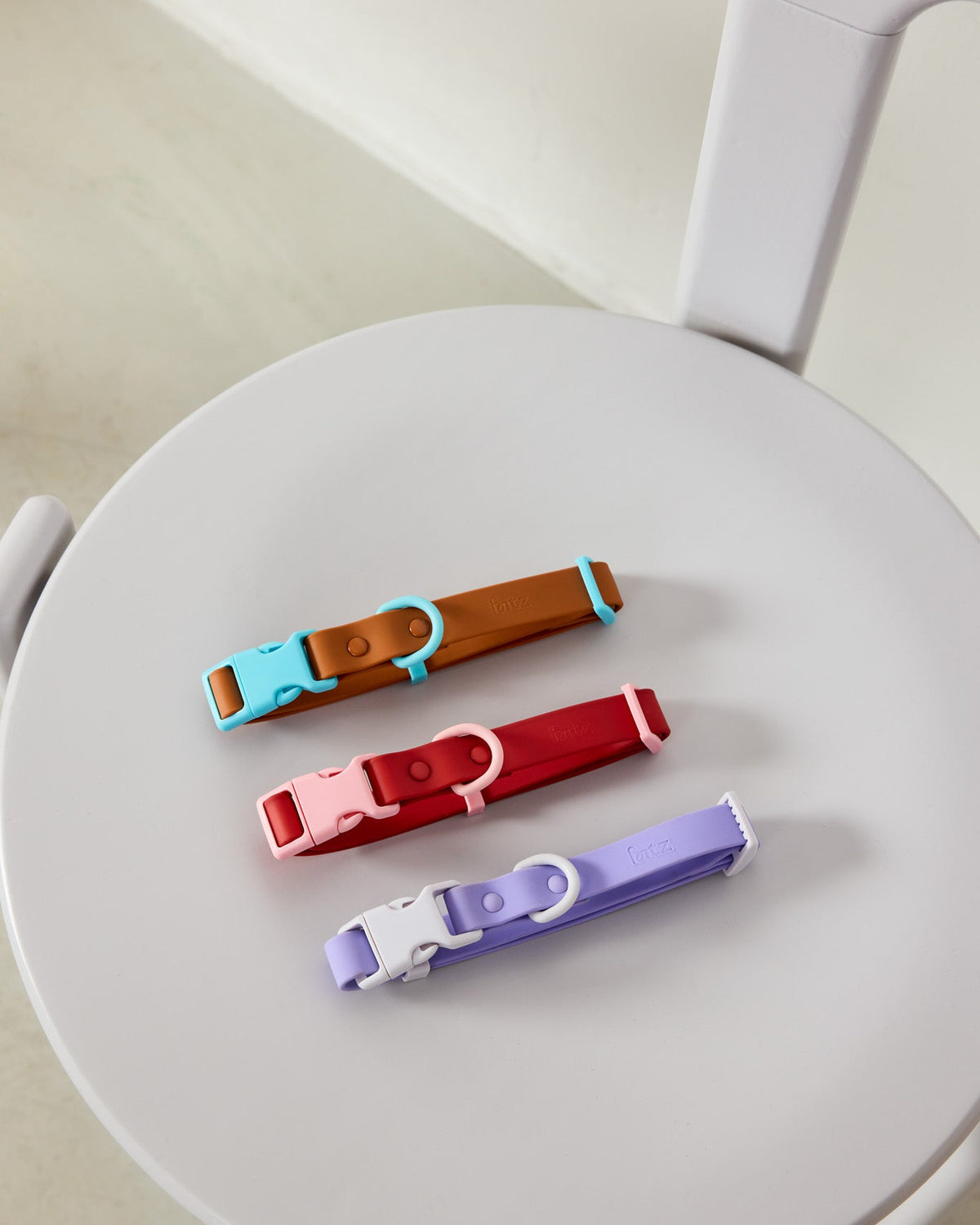
Our Medium (36–47 cm) and Large (41–59 cm) overlap between 41 and 47 cm (16.1–18.5 in). In that zone both sizes fit. Here is how to choose:
- Pick the range where your number sits in the middle. That keeps room to adjust both ways.
- Look at the width. Medium has a 2 cm (0.79 in) strap, Large 2.5 cm (0.98 in). A wider strap spreads pressure better on a strong dog or a puller.
- Young dog still growing? Choose the size that leaves room to grow.
- Thick coat? Measure over the coat without squashing it, and aim for the middle of a range.
Dog collar size by breed
Breed is a good starting point, not an answer. Breed charts online often disagree by several centimetres (an inch or more), because build, sex, coat and the way people measure all differ. These are the breeds we see most often in each of our sizes.
| Size | Neck range | Typical breeds |
|---|---|---|
| Small | 26–36 cm 10.2–14.2 in | Jack Russell, Miniature Dachshund, Shih Tzu, Cavalier King Charles Spaniel, Miniature Schnauzer |
| Medium | 36–47 cm 14.2–18.5 in | Beagle, French Bulldog, Cocker Spaniel, Border Collie, Corgi |
| Large | 41–59 cm 16.1–23.2 in | Labrador Retriever, Golden Retriever, German Shepherd, Boxer, Dalmatian |
A few breeds to measure carefully: a Standard Dachshund can be too big for Small, and a slim Labrador or a female Golden may land in the zone where Medium and Large both fit. Very small dogs with a neck under 26 cm (10.2 in) fall outside our current sizes.
What size collar for a puppy?
Puppies grow fast, large breeds especially between about three and eight months. Measure your puppy the same way as an adult, choose the size whose range includes today’s number, and check the fit every week or two. Loosen the collar as soon as two fingers no longer fit.
Our smallest size starts at a 26 cm (10.2 in) neck. For a very small puppy, wait a little or start with a temporary collar. Medium and large breeds will usually need a bigger size once they are fully grown.
Special cases
Sighthounds and narrow heads
Greyhounds, Whippets and Salukis have a head that is narrower than the neck, so a regular collar can slip off. Many owners use a martingale collar, which tightens a little when the dog pulls. Our clip-buckle collar is not a martingale. For these breeds, measure the head as well and choose a collar made for them.
Flat-faced breeds and dogs who pull
For a French Bulldog, a Pug or a strong puller, a harness is often the better choice for walks. A small 2025 study of 20 dogs found that a collar raised eye pressure in flat-faced dogs, even at rest, while a harness did not (Bailey, Packer and Wills, Veterinary Medicine and Science). Many vets also recommend a harness for small dogs who pull. A collar still has its place for the ID tag and calm walks.
Thick or long coats
Measure over the coat without flattening it. After a haircut or a moult, redo the two-finger check, because the collar may need tightening.
A matching leash: which size?
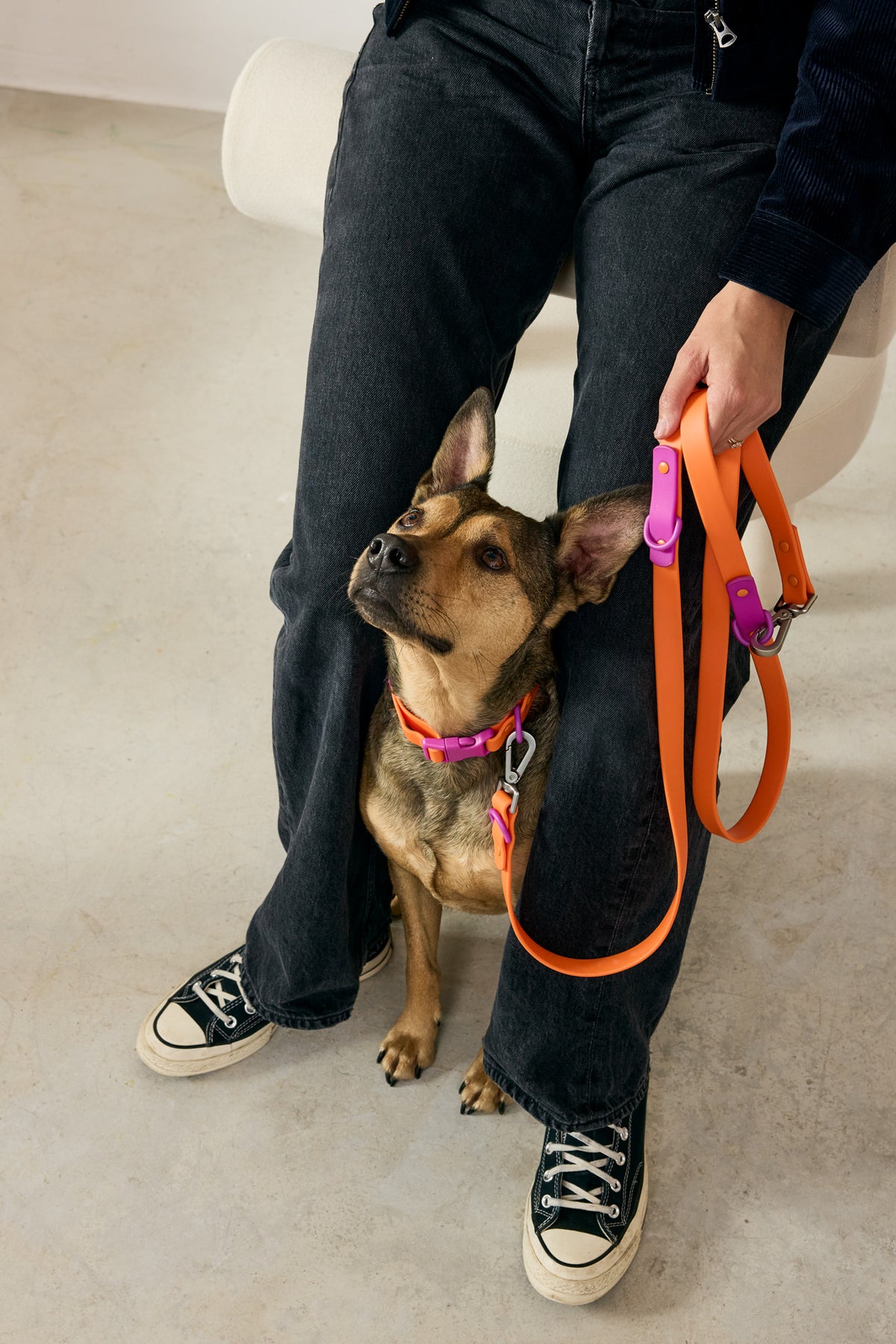
The Fritz Leash comes in two widths. Small (1.5 cm) is lighter and pairs with the Small collar for little dogs. Standard (2 cm) suits medium and large dogs. Both have three attachment points and spinning clips, so you get three lengths in one leash.
With the Walk Set you choose the collar size and the leash size separately, in the same colourway, at a set price.
Leash, bed and bowl mat sizes
All the dimensions for our other products, in one place.
THE FRITZ LEASH
One leash. Three attachment points.
Small and Standard each have three attachment points. Available sizes depend on the selected color.
Small
Adjustable length90–175 cm35.4–68.9 in
Strap width1.5 cm0.59 in
Standard
Adjustable length95–187 cm37.4–73.6 in
Strap width2 cm0.79 in
The length between you and your dog depends on the attachment point and the loop you make. For wearing around your body, compare with your current leash or ask us for advice.
Chat isn’t opening right now. Contact Danielle.
Fritz Bed
Measure the space your dog takes up in their usual resting position. For a replacement cover or insert, match your existing Fritz Bed size.
| Size | Dimensions |
|---|---|
| Standard | 35 × 25 inapprox. 89 × 64 cm |
| Grande | 40 × 31 inapprox. 102 × 79 cm |
Chat isn’t opening right now. Contact Danielle.
Space for the bed. Room for your dog.
Compare the inner cushion dimensions with the room your dog takes up when resting. Outside dimensions show how much space the bed needs in your room.
Standard
- Inner cushion
- 50 × 40 cm19.7 × 15.7 in
- Overall size
- 80 × 56 cm31.5 × 22 in
Grande
- Inner cushion
- 75 × 54 cm29.5 × 21.3 in
- Overall size
- 95 × 70 cm37.4 × 27.6 in
Chat isn’t opening right now. Contact Danielle.
Room for your bowls
Measure your bowls side by side with a little room around them. Both mats are 30 cm deep; Grande adds 10 cm of width.
| Size | Width × depth |
|---|---|
| Standard | 40 × 30 cm15.7 × 11.8 in |
| Grande | 50 × 30 cm19.7 × 11.8 in |
One mat included. Bowls not included.
Chat isn’t opening right now. Contact Danielle.
Dog collar sizing FAQ
What size collar does my dog need?
Measure the neck with two fingers of room, then compare with our ranges: Small 26–36 cm (10.2–14.2 in), Medium 36–47 cm (14.2–18.5 in), Large 41–59 cm (16.1–23.2 in). Pick the size where your number sits near the middle.
How do I measure my dog’s neck for a collar?
Use a soft tape at the base of the neck with your dog standing. The tape touches the coat without squashing it, with two flat fingers underneath. No tape? Use a piece of string and measure it against a ruler.
How tight should a dog collar be?
You should be able to slide two flat fingers between the collar and the neck. When you pull it gently forward, it should not come over the head.
What is the difference between neck size and collar size?
Neck size is the measurement around your dog. Collar size depends on the brand: some charts list the bare neck, others the strap length, which is why you see advice to add anything from 1 cm to 2 inches. Our ranges are the neck measured with two fingers of room, so you add nothing.
Should I size up or down if my dog is between sizes?
Pick the size where your number sits in the middle of the range. Between Medium and Large, also look at the width: 2 cm or 2.5 cm. For a puppy that is still growing, choose the size with room to grow.
What size collar does a French Bulldog or a Labrador need?
A French Bulldog most often wears a Medium and a Labrador most often a Large. Dogs of the same breed vary a lot, though, so always measure before you order.
Can I use my dog’s weight to choose a collar size?
Only as a rough hint. Two dogs of the same weight can have very different necks depending on build and coat. The neck measurement is the only reliable guide.
What size collar for a puppy?
Measure your puppy like an adult and choose the size that includes today’s number. Check the fit every week or two. Our smallest size starts at a 26 cm (10.2 in) neck.
How often should I check my dog’s collar fit?
About once a month for an adult dog, every week or two for a puppy, and after grooming, a moult or a change in weight.
Collar or harness: which is better for my dog?
For a dog who pulls, a flat-faced breed or a very small dog, many vets recommend a harness for walks. A collar is still handy for the ID tag and calm walks.
Found your size?
Eight two-tone colourways, collar and leash to match. 30-day returns.
Most popular
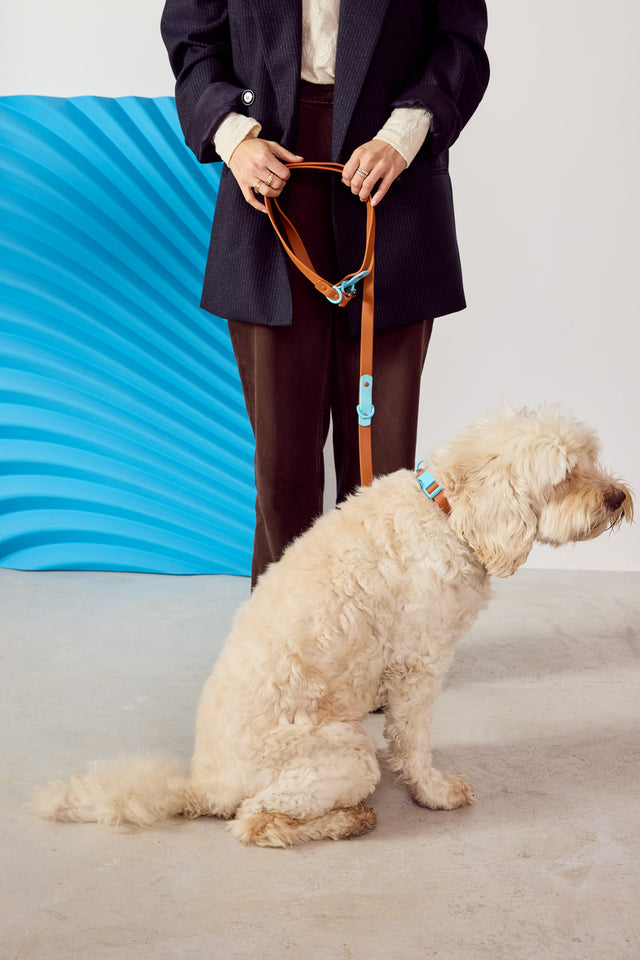
Fritz Collar + Leash Walk Set
$85.00
Collar and leash in the same colourway, each in its own size, at a set price.
Shop now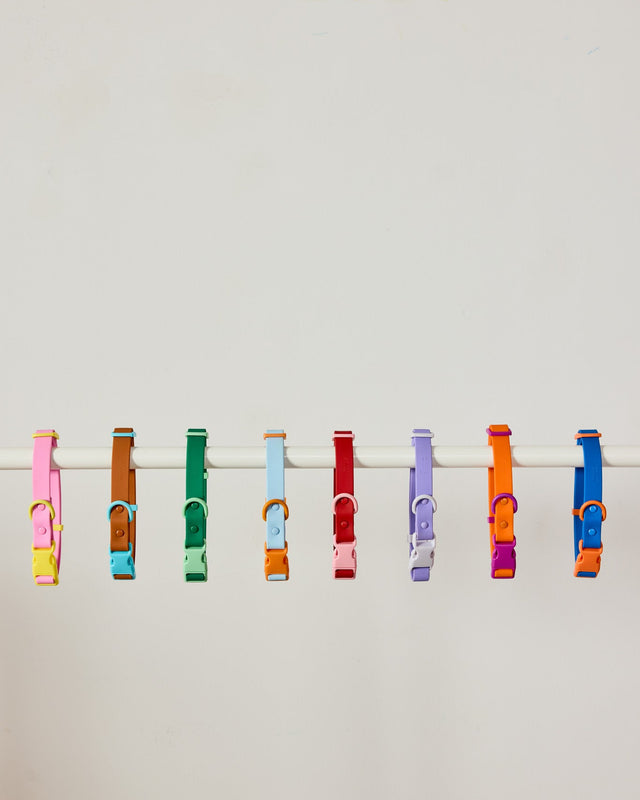
The Fritz Collar
$37.50
Three sizes from 26 to 59 cm (10.2–23.2 in). Rinses clean after the walk.
Shop now